How the first bobcat on Jekyll was tagged
By Tess Malone
Many visitors love Jekyll Island for a chance to retreat from society. Bobcats share that instinct for solitude, moving quietly through the island’s landscapes and rarely revealing themselves to humans. “They are very cryptic animals and keep to themselves,” says Yank Moore, Jekyll Island Authority’s director of conservation.
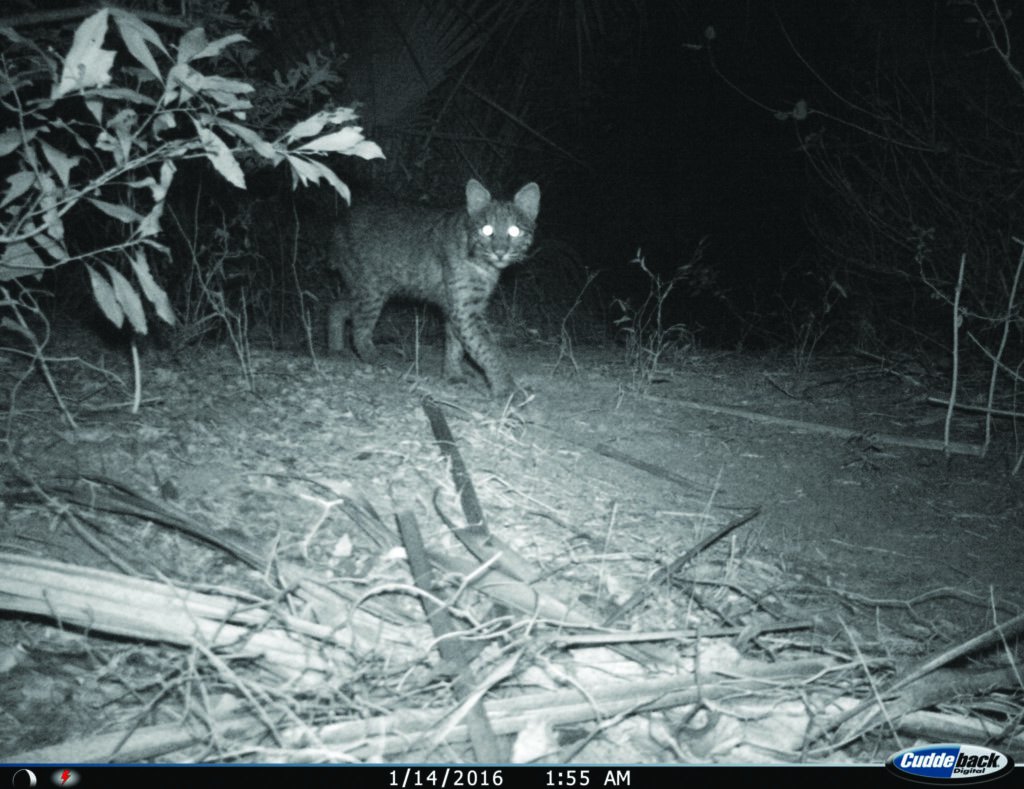
Although bobcats have been in the Southeast for millions of years, confirming their existence on Jekyll was difficult. Until just a few years ago, the only evidence that bobcats once lived on the island came from photographs of pelts from the Jekyll Island Club era (1880s-1940s). The wildcat’s signature bobbed tail was first spotted on a trail camera in September 2014, and two years later, a kitten made its on-camera debut. Still, JIA staff wouldn’t come face-to-face with a bobcat until September 2017.
That male bobcat wasn’t looking for company. Ill and unable to move, the JIA team transported him to the Jacksonville Zoo for rehabilitation. He was fitted with a tracking collar and released back on the island—collar and all—later that year. But he didn’t stay long. In May 2018, he was spotted leaving Jekyll on the causeway.
The species (Lynx rufus) is still on the island. The JIA tagged a female bobcat in later years to better understand its reproductive habits and movement patterns, learning that bobcats will traipse across the entire island, from marshes to maritime forests, based on food availability. Bobcats eat small mammals like mice and even deer, and they have very few predators on the island. Even so, bobcats need room to roam, which naturally keeps their numbers in check.
The JIA estimates just a dozen or so are roaming Jekyll’s limited landmass. Male cats, like the one seen leaving the island, often disperse to establish their own territory elsewhere.
For now, the JIA keeps track of the mysterious mammals on trail cameras. Everyone deserves their privacy—even bobcats.